
MongoDB vs PostgreSQL — Which Database Should You Use? (2026 Guide)
I've used both databases in production projects with real users. Here's when each one makes sense — and the mistakes I've made choosing wrong.
Zeeshan Zakir
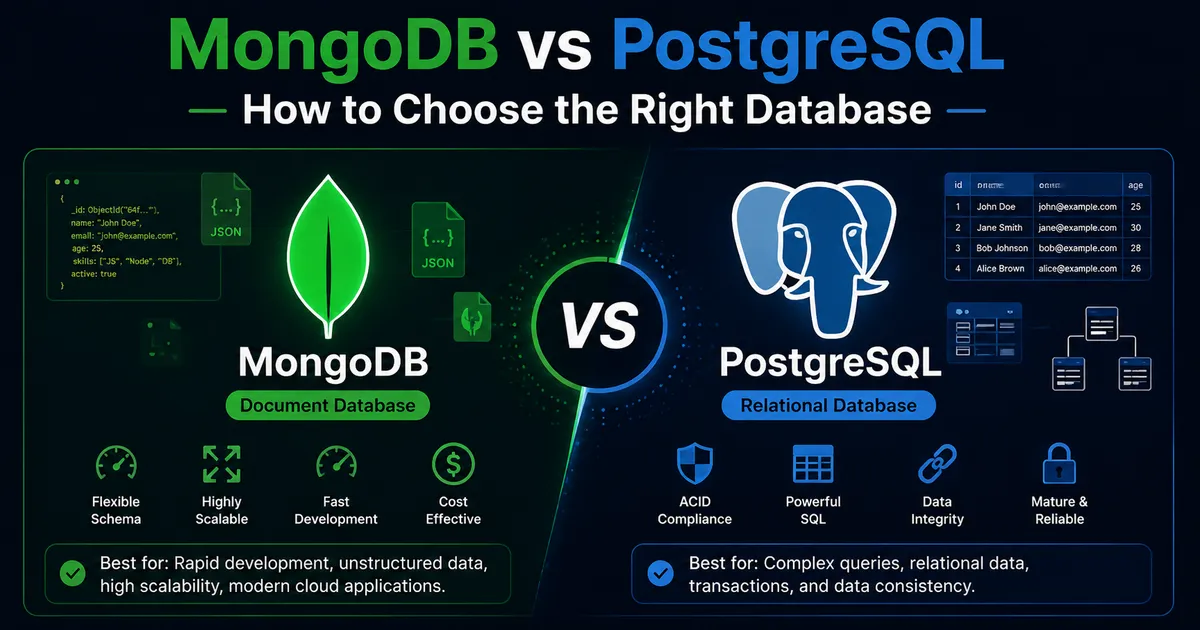
About three years into my development career I confidently told a client that MongoDB was the right database for their project. It was what I knew, it was fast to set up, and the flexible schema felt like a feature rather than an absence of structure.
Eighteen months later I was helping that same client migrate their data to PostgreSQL because the lack of schema had created consistency problems that were becoming increasingly expensive to work around.
I don't tell that story to condemn MongoDB — I still use it regularly and recommend it for the right projects. I tell it because database choice is one of those decisions that's easy to make casually and expensive to undo. Understanding what makes each database genuinely different — not just the marketing descriptions — changes how you approach that choice.
The Fundamental Difference
MongoDB is a document database. Data is stored as JSON-like documents in collections. Each document can have a different structure. There's no required schema enforced at the database level unless you configure one.
PostgreSQL is a relational database. Data is stored in tables with rows and columns. Every row in a table must conform to the table's defined schema. Relationships between data are defined explicitly with foreign keys.
This isn't just a syntax difference. It's a fundamentally different model for thinking about data.
When MongoDB Is the Right Choice
MongoDB excels when your data is naturally document-shaped — when the things you store have variable structure and are accessed mostly as complete units.
A content management system is a good example. Blog posts have titles, bodies, tags, images, and metadata — but different posts might have different fields (some have videos, some have image galleries, some have code blocks). Storing each post as a document means you can add new field types without altering a schema.
User activity logging is another strong MongoDB use case. Each event might have slightly different properties depending on what the user did. Forcing all those events into a rigid relational schema creates sparse tables with many null values. Documents handle this more naturally.
Applications where you read entire objects at once — a user profile, a product listing, a blog post — work well with MongoDB because you can structure the document to match exactly what your application needs to display, without joining multiple tables.
MongoDB is also genuinely easier to start with for JavaScript developers. The query syntax is JSON-based. Mongoose schemas look similar to JavaScript objects. The mental model maps naturally onto how JavaScript code already thinks about data.
When PostgreSQL Is the Right Choice
PostgreSQL excels when your data has clear, consistent relationships that you need to query in multiple ways.
An e-commerce application is the classic example. Orders relate to customers. Orders contain line items. Line items reference products. Products have inventory. All of these relationships matter and you need to query across them — "show me all orders from customers in California who bought Product X in the last 30 days." This kind of relational query is what SQL was designed for.
Financial applications where data integrity is critical need PostgreSQL's ACID transaction guarantees. A bank transfer that debits one account and credits another must either complete fully or fail fully — no partial states. PostgreSQL handles this reliably at the database level. MongoDB has improved significantly on transactions but PostgreSQL has been doing this reliably for decades.
Whenever you know your schema upfront and it won't change much, PostgreSQL is a better long-term choice. The schema enforcement that feels restrictive during rapid prototyping becomes a reliability feature in production. It prevents the kind of data inconsistency I described in that client project story.
The Practical Reality in 2026
In 2026 the gap between these databases has narrowed significantly.
MongoDB now supports transactions properly. MongoDB 6+ has improved schema validation. Atlas (the hosted service) has mature operational tooling.
PostgreSQL has Supabase, which provides a generous free tier and a developer-friendly interface that makes PostgreSQL almost as easy to start with as MongoDB Atlas.
The "MongoDB is flexible and PostgreSQL is rigid" framing is less true than it used to be. Both can handle most application requirements when used correctly.
My Honest Recommendation
If you're a MERN stack developer and you're building your first few projects, start with MongoDB. The learning curve is gentler, the JavaScript mental model maps naturally onto document storage, and getting something working quickly is valuable when you're still learning.
As you build more complex projects — particularly anything with financial data, complex relationships between entities, or strict consistency requirements — learn PostgreSQL. Supabase makes this considerably easier than setting up Postgres manually used to be.
For most personal projects and small-to-medium SaaS products, either works well. The difference in the early stages is mostly about developer familiarity. The difference in production systems that handle real traffic and real money is more significant — and in those cases, PostgreSQL's reliability record earns the more deliberate learning investment.
Need help building this?
I offer full-stack development services for startups and product teams.
If you want a faster path from idea to shipped product, I can help with architecture, frontend systems, backend APIs, and launch-ready builds.
View ServicesShare this post
Related posts
More practical reading from the blog to keep your momentum going.
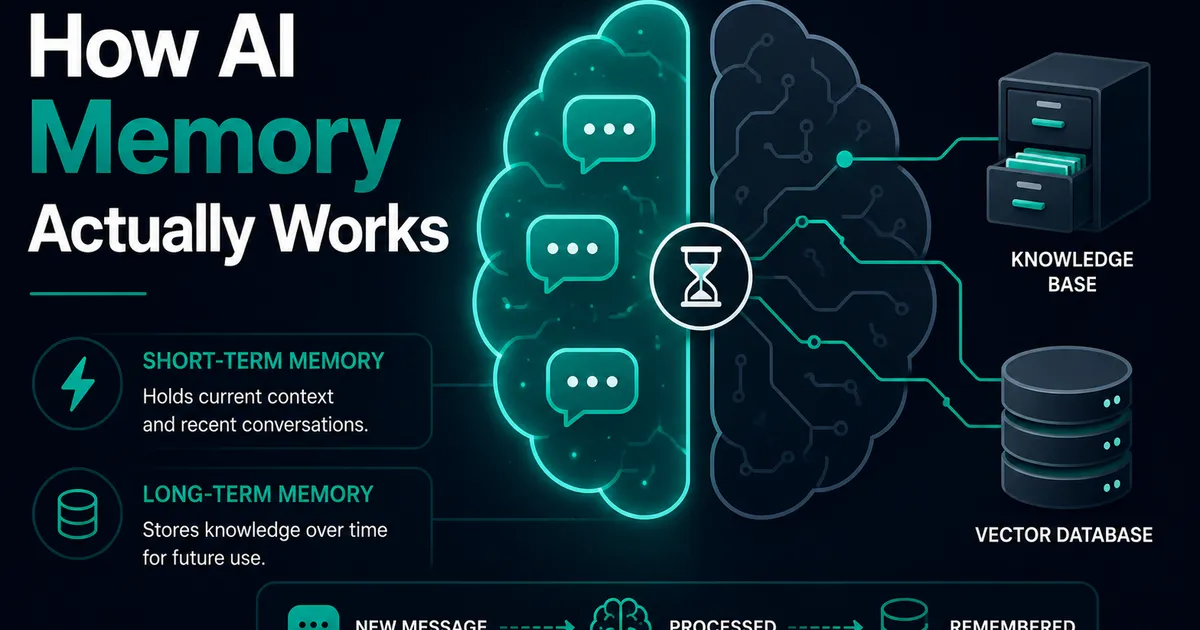
AI Memory Systems: Short-Term vs Long-Term Memory
Every API call meets a total stranger — LLMs remember nothing. How AI memory systems actually work: short-term, long-term, and forgetting.
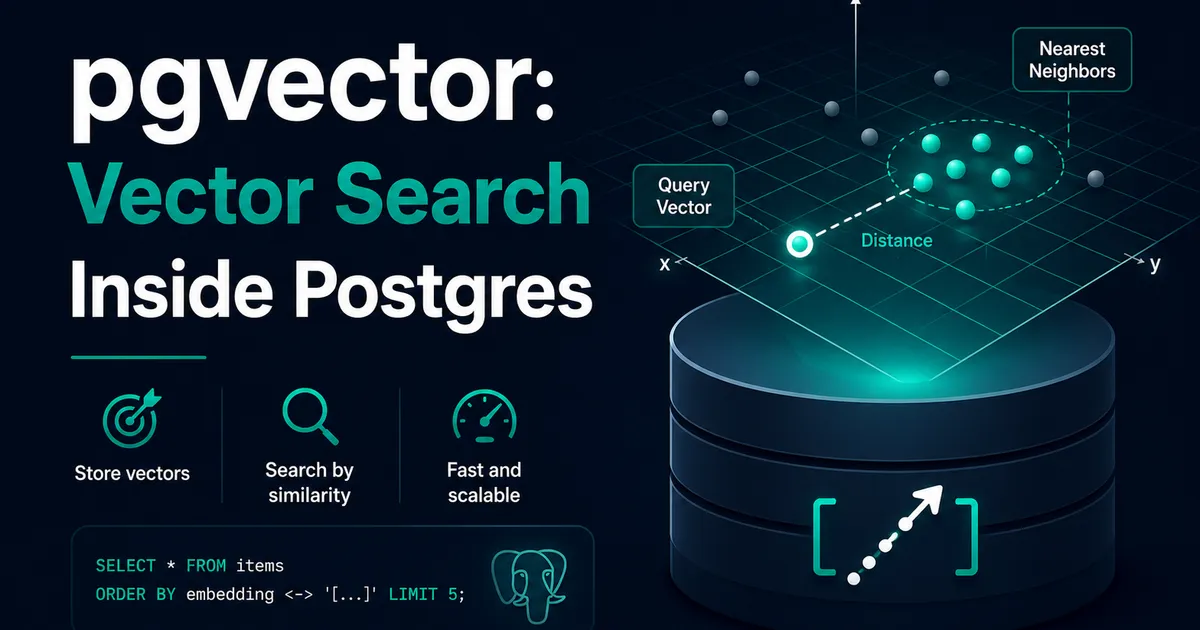
Vector Databases Explained with Supabase pgvector
I almost paid for a dedicated vector database. Turns out Postgres does it. A practical pgvector tutorial with Supabase — setup to indexes.
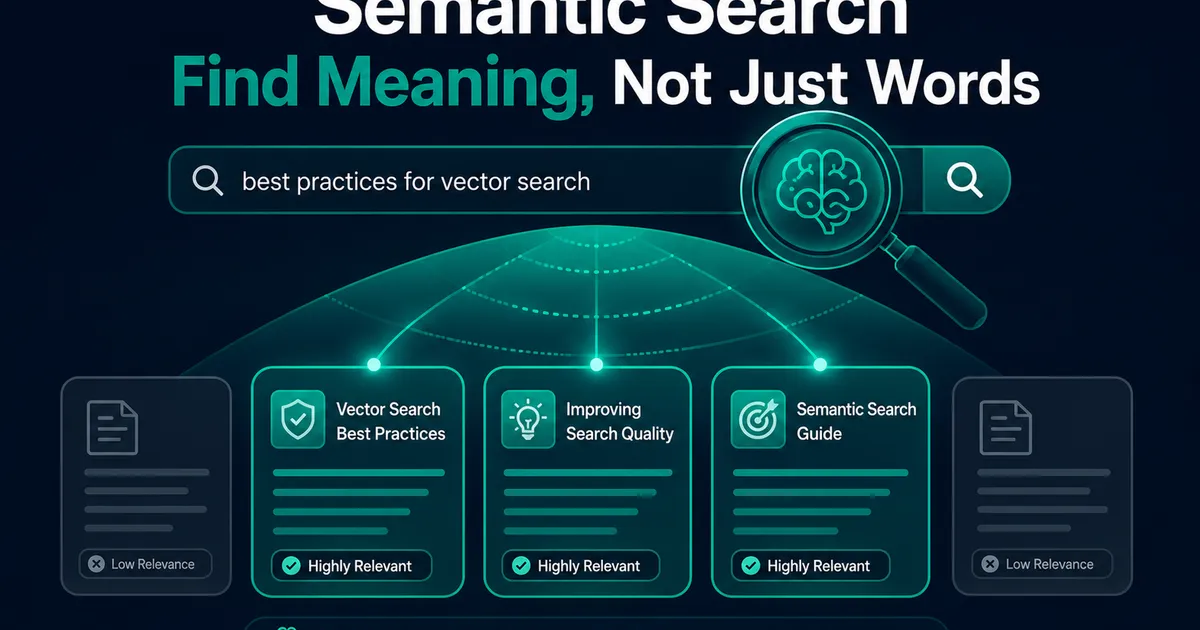
How I Added AI Search to My Next.js Website
Users searched "remove account," my docs said "delete account," search returned nothing. So I added AI semantic search to my Next.js site.