
What Is Serverless Computing and Should You Actually Use It? (2026 Guide)
Serverless" has one of the worst names in tech. Here's what it actually means, why developers use it, and when it makes sense for your project.
Zeeshan Zakir
The first time someone told me I should use serverless for my API, I nodded confidently and then immediately Googled "what is serverless" when they left. The name is genuinely confusing. There are obviously servers involved. They haven't been eliminated.
After using serverless infrastructure for several projects — both cases where it was the right call and ones where it absolutely wasn't — I have a clear enough picture to explain it properly.
The Name Is Misleading, Here's What It Actually Means
Serverless doesn't mean "no servers." It means you don't manage servers.
In traditional hosting, you rent a virtual machine, configure the operating system, install your runtime, manage security updates, handle scaling when traffic spikes, pay for the server whether it's busy or idle, and deal with it when something crashes.
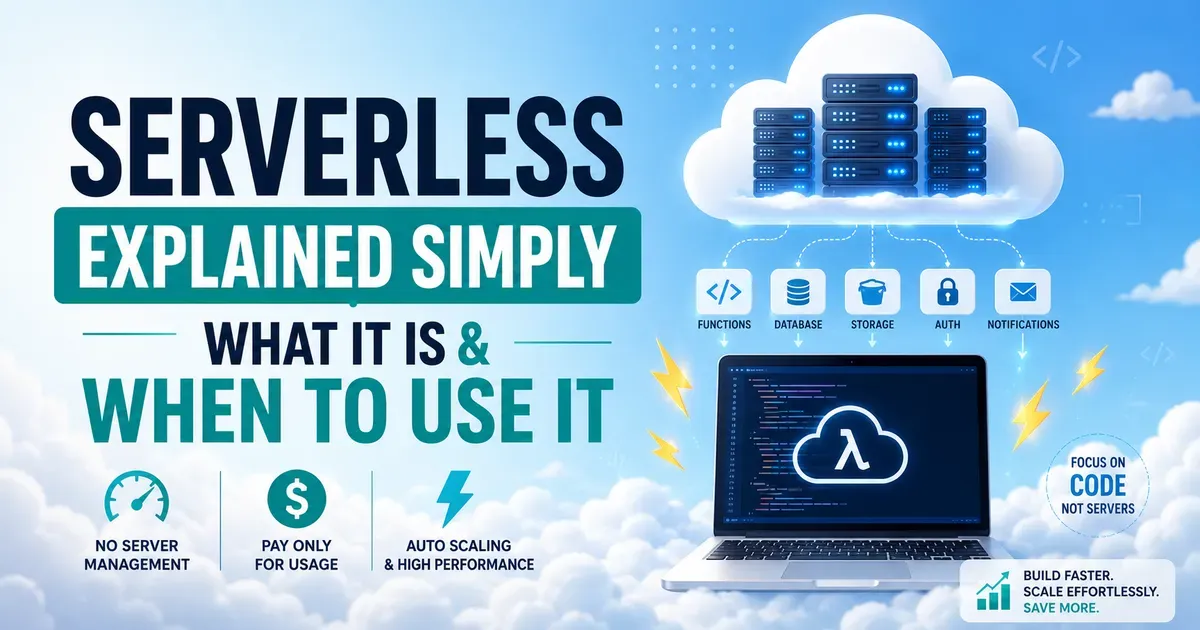
In serverless computing, you write functions, upload them to a platform, and the platform handles everything else. The servers exist — you just never interact with them directly.
The "serverless" naming refers to the experience from the developer's perspective: you deal with code and configuration, not servers.
How Serverless Functions Actually Work
When you deploy an API to a serverless platform, each API endpoint becomes a function. When a request arrives at that endpoint, the platform:
- Spins up an execution environment (takes milliseconds if it's already warm)
- Runs your function with the request as input
- Returns the response
- Scales down the environment when idle
If ten requests arrive simultaneously, ten separate function instances run in parallel automatically. If ten thousand requests arrive, ten thousand instances run. You don't configure this — the platform handles it.
The pricing model matches this behavior. You pay per execution, typically measured in milliseconds. If nobody uses your API for a week, you pay nothing for that week.
The Platforms You've Probably Already Used
If you've deployed a Next.js app on Vercel, you've been using serverless without necessarily knowing it.
Vercel Functions are serverless functions. Your Next.js API routes — those files in app/api/ — run as serverless functions on Vercel's infrastructure. Every request to your API spins up a function, processes the request, and returns the response. You never configured a server for this.
AWS Lambda is Amazon's serverless offering and the one most developers mean when they say "serverless" in a professional context. Lambda functions support most major programming languages, integrate with the broader AWS ecosystem, and can handle enormous scale.
Cloudflare Workers is a newer alternative that runs functions at the "edge" — meaning in data centers physically close to your users around the world. Response times can be dramatically lower than traditional serverless because the code runs near the person making the request.
Netlify Functions and Supabase Edge Functions are other common options in the Next.js / Jamstack ecosystem.
Where Serverless Works Really Well
APIs with variable traffic patterns. If your product gets heavy traffic during business hours and very little at night, serverless is economically efficient. You pay for actual usage, not continuous capacity.
Event-driven processing. Sending an email when a form is submitted. Processing an uploaded image. Sending a notification when a database record changes. These are perfect serverless use cases — small functions triggered by events.
Next.js API routes. As mentioned, if you're using Vercel, your API routes are already serverless. This is one of the best-matched combinations in modern web development.
Startups and side projects. Serverless platforms have generous free tiers. Vercel's free tier covers most small projects entirely. AWS Lambda includes one million free invocations per month. You can run real production workloads without paying anything until you have meaningful scale.
Where Serverless Has Real Limitations
Cold starts. When a serverless function hasn't been called recently, it needs a moment to initialize before responding. This "cold start" can add 100–500ms to the first request after a period of inactivity. For most web applications this is acceptable. For applications requiring consistent sub-100ms response times, it can be a problem.
Long-running tasks. Serverless functions have execution time limits — typically between 10 seconds and 15 minutes depending on the platform and plan. Database migrations, video processing, bulk exports, and other long-running tasks don't fit the serverless model well. Use a dedicated background job service for these.
WebSockets and persistent connections. Serverless functions are stateless and short-lived. Real-time features that require persistent WebSocket connections don't work with standard serverless infrastructure. There are workarounds (Pusher, Ably, Supabase Realtime), but the architecture is more complex.
Pricing at high scale. Serverless can become expensive at very high request volumes. At extreme scale, a well-configured traditional server or container setup can be more cost-effective. This is rarely a concern for most projects, but worth knowing.
Should You Use Serverless for Your Next Project?
For most web developers in 2026, the practical answer is: you probably already are, and you should continue.
If you're building with Next.js on Vercel, serverless is the default. Your API routes run as serverless functions automatically. You don't need to make a deliberate architectural decision — the platform made it for you.
If you're building a standalone API or backend service, serverless functions on Vercel or AWS Lambda are an excellent starting point. The operational simplicity is real, the free tiers are generous, and automatic scaling means you don't need to think about infrastructure until you have scale worth worrying about.
The case for avoiding serverless mainly applies to applications with consistent high traffic (where always-on servers are more economical), applications requiring persistent connections, or teams with strong existing infrastructure expertise who prefer managing their own servers.
For everything else — especially side projects, SaaS MVPs, and APIs for small-to-medium scale web applications — serverless removes real operational complexity without meaningful downsides.
Need help building this?
I offer full-stack development services for startups and product teams.
If you want a faster path from idea to shipped product, I can help with architecture, frontend systems, backend APIs, and launch-ready builds.
View ServicesShare this post
Related posts
More practical reading from the blog to keep your momentum going.
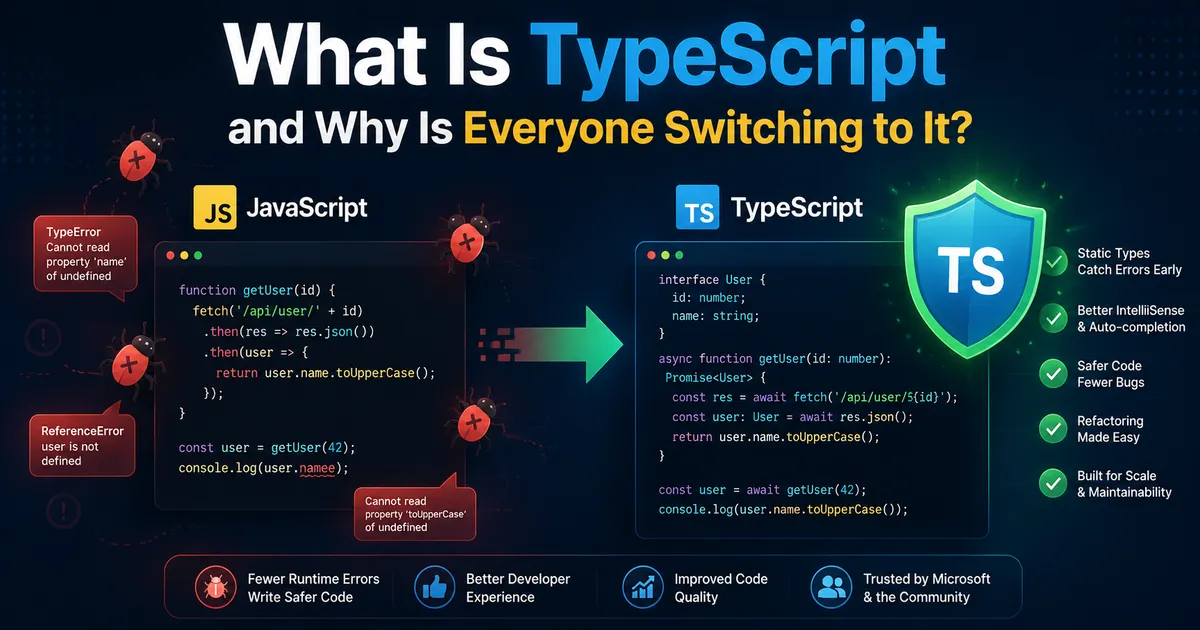
What Is TypeScript and Why Every Developer Is Switching to It in 2026
TypeScript went from optional to expected in just a few years. Here's a plain-English explanation of what it is, why it exists, and whether you need to learn it.
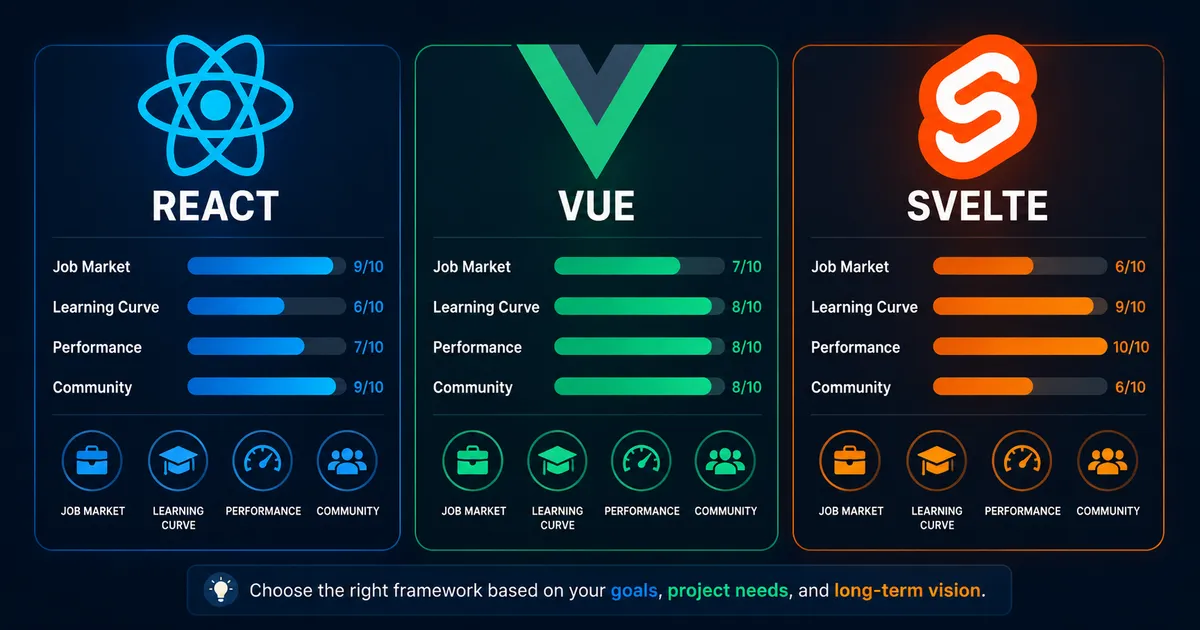
React vs Vue vs Svelte — Which JavaScript Framework Should You Learn in 2026?
I've built real projects with all three. Here's an honest comparison — not based on benchmarks, but on what it actually feels like to use them day to day.
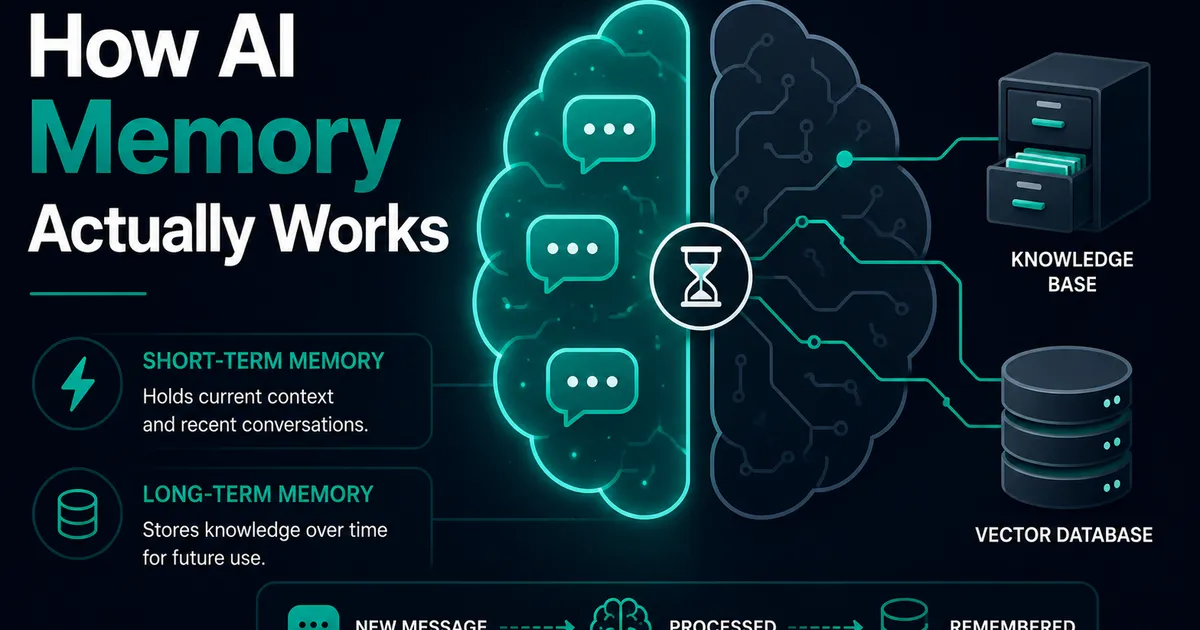
AI Memory Systems: Short-Term vs Long-Term Memory
Every API call meets a total stranger — LLMs remember nothing. How AI memory systems actually work: short-term, long-term, and forgetting.